
13c Indian Head Cent Issue (Scott #1734)
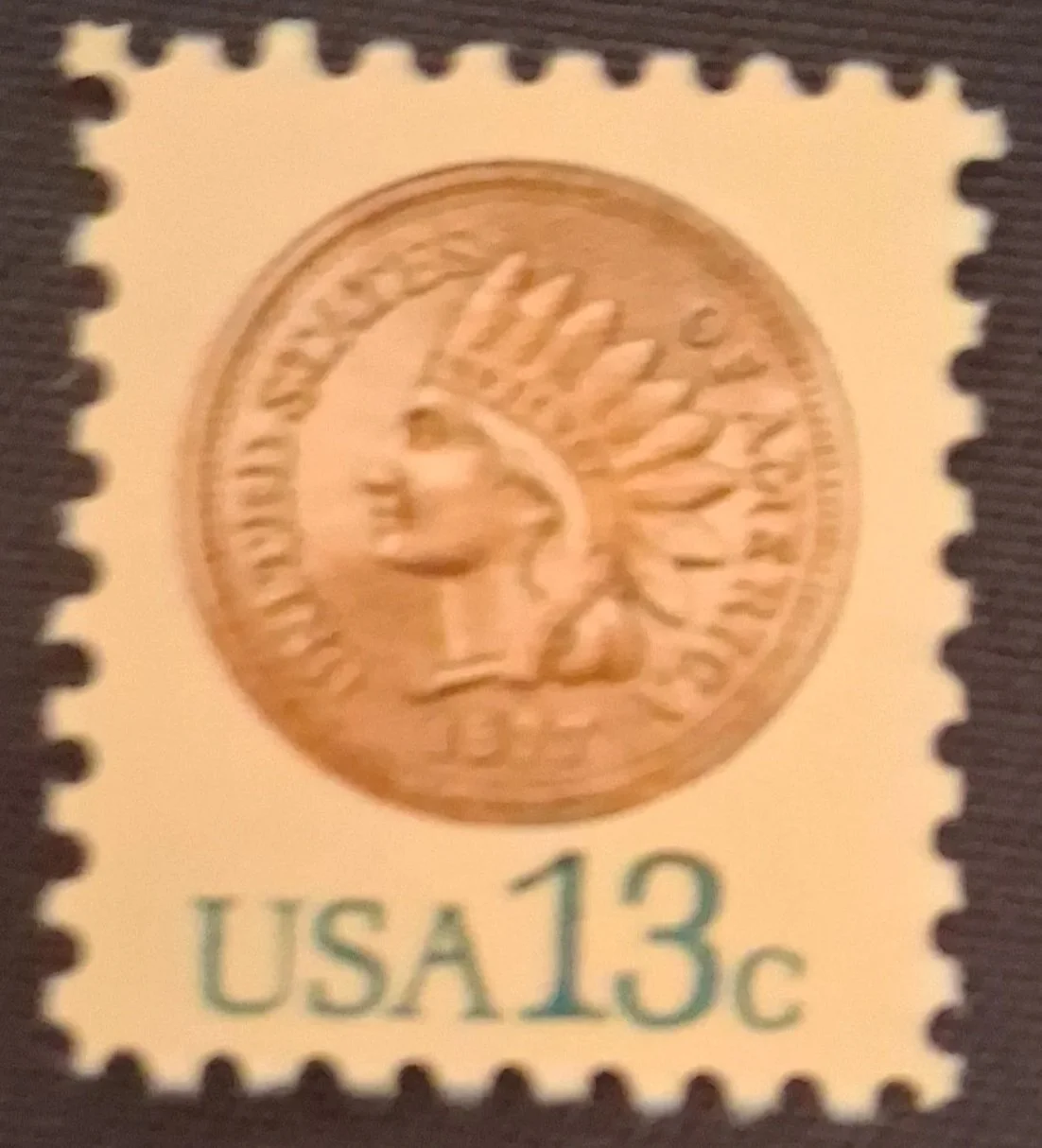
Issued on January 11, 1978, in Kansas City, Missouri, the 13¢ Indian Head Cent stamp (Scott #1734) is a unique crossover piece celebrating American numismatics and philately. Designed by Gravure graphics and printed by the Bureau of Engraving and Printing via the intaglio/engraved process, the stamp depicts an 1877 Indian Head Cent—one of the rarest and most iconic key dates in U.S. coinage. Rendered in brown and blue-green ink on perforated paper (Perf 11), the 13-cent face value originally matched the first-class letter rate of the late 1970s. Because of its massive initial production run, mint copies and intact sheets remain widely available and affordable for collectors today.
The "Miniature Stamp" Experiment
Beyond its coin motif, the stamp holds a distinct place in postal history as part of the USPS's short-lived "miniature stamp" trial. In an effort to cut paper costs and reduce printing expenditures during late-1970s inflation, postal officials shrunk the standard stamp size down to an ultra-compact 0.54 by 0.66 inches—making it the smallest U.S. postage stamp ever produced. This size reduction allowed 150 stamps to fit on a single pane rather than the standard 100. Test-marketed in only five cities (Kansas City, Richmond, Hartford, Memphis, and Portland), the experiment was quickly deemed a failure. Postal customers and postal clerks heavily criticized the tiny stamps for being difficult to tear along perforations, awkward to handle, and easily lost, leading the Postal Service to abandon the miniature format altogether.